


Battery-Powered Patient Lift | Electric Hoyer Lift with Sling Included
Battery-Powered Patient Lift | Electric Hoyer Lift with Sling Included
Couldn't load pickup availability
♡ 10 % of this purchase funds home‑safety grants for older adults + enjoy our easy 30 day return policy!
Safe Full-Body Transfers at Home — Sling Included
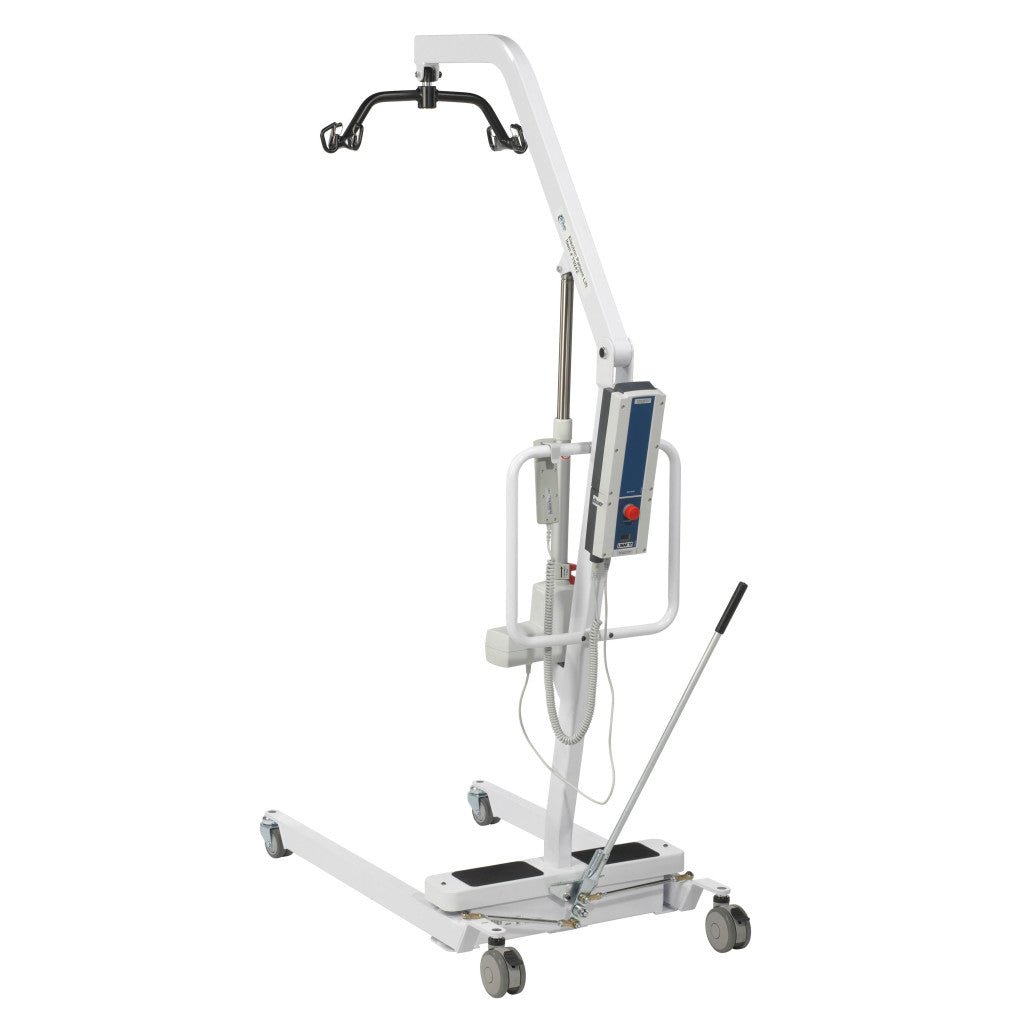
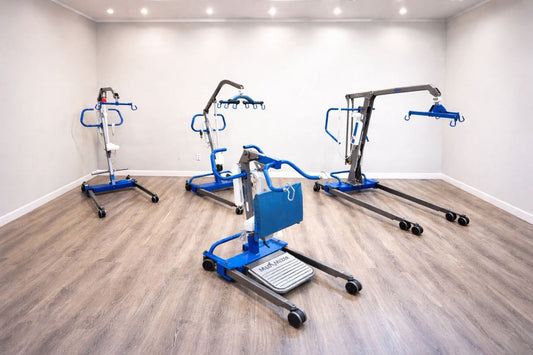
This battery-powered electric patient lift (Drive Medical #13240) is a full-body dependent transfer lift designed for home caregiving. It raises and lowers with a handheld push-button control — no manual pumping required — so one caregiver can safely transfer a loved one between bed, wheelchair, chair, or commode without physical strain.
Every lift includes a divided-leg sling (Drive Medical #13262L, available in Medium or Large), ready to use out of the box. No separate sling purchase needed.
Why Choose an Electric Patient Lift Over a Hydraulic Lift?
Traditional hydraulic Hoyer lifts require a caregiver to manually pump the lift up and hold a release valve to lower it — demanding significant physical effort, especially for heavier individuals. This electric lift eliminates that entirely: the Linak motor and actuator do all the lifting at the press of a button, reducing caregiver injury risk and making solo transfers realistic for most home-care situations.
For families managing stroke, ALS, advanced Parkinson's disease, late-stage dementia, or spinal cord injury, a battery-powered lift is often the key factor that allows a loved one to continue aging in place safely rather than transitioning to institutional care.
Key Features
- Sling included — divided-leg sling (Medium or Large) attaches to the six-point cradle, ready to use
- 450 lb weight capacity — heavy-gauge steel construction
- Electric push-button operation via handheld control — no manual pumping
- Emergency lowering button — switches to manual mode to safely lower the patient if power is lost mid-transfer
- Audible low-battery warning at 50% charge so you're never caught unprepared
- Charges from any standard AC outlet; battery does not need to be removed to charge
- Lift will not operate while charging — safe home-care design
- Adjustable base width: 25" closed / 41.5" open for navigating tight spaces and fitting under furniture
- Boom height range: 27.5" – 76" accommodates low beds to standard chairs
- 5" rear casters for smooth rolling on home flooring
- Limited lifetime warranty on frame; 1-year warranty on components and electrical parts
Who This Patient Lift Is For
This is a full-body dependent lift — the right choice when someone cannot stand or bear any weight during transfers. Common use cases include:
- Stroke survivors with hemiplegia or paralysis
- Late-stage Parkinson's disease or ALS
- Advanced multiple sclerosis (MS)
- Spinal cord injury (SCI) / quadriplegia or paraplegia
- Post-surgical recovery with weight-bearing restrictions
- Elderly individuals with severe mobility limitations
If the person can briefly stand but not walk, a stand-assist lift may be a lower-cost alternative. Contact us if you’re unsure which lift is right for your situation.
Specifications
Specifications
Frequently Asked Questions
Frequently Asked Questions
P65 Warning for Plastics
P65 Warning for Plastics
⚠ WARNING:This product can expose you to chemicals including ethylene, which is known to the State of California to cause cancer and/or reproductive harm. For more information go to www.P65Warnings.ca.gov


Why we know this works!
Why we know this works!
Get Help from an Occupational Therapist!
Find an Occupational Therapist →





Not sure what you need?
An occupational therapist can assess your situation and recommend exactly what will help. Tell us what you're dealing with and we'll connect you with the right OT.
Related Products
-
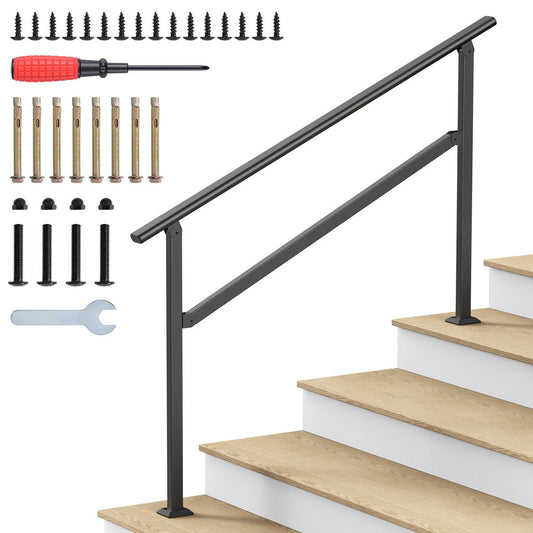
Hand Rail for Outdoor Steps | Porch Railing for 2 to 5 Steps
Regular price From $59.99Regular priceUnit price per -
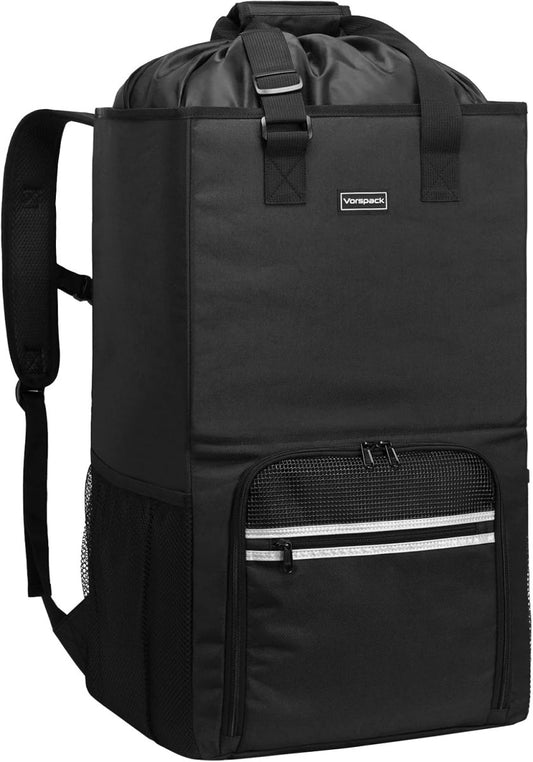
Hands-Free Laundry Backpack for Stairs | Stands Up as a Hamper
Regular price $39.00Regular priceUnit price per -
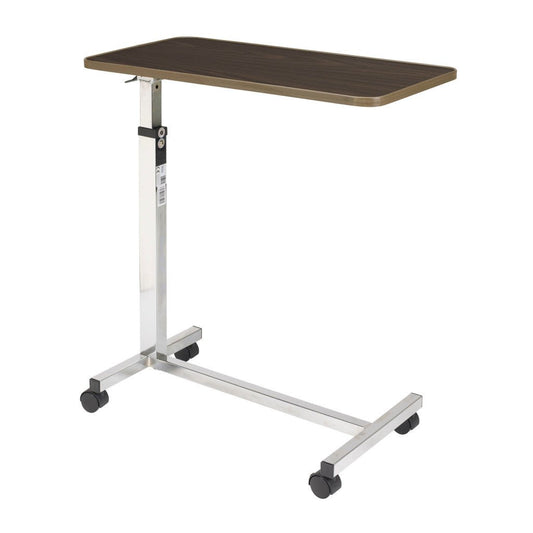
Tilt-Top Overbed Table | Hospital Bed Table for Home
Regular price $140.00Regular priceUnit price per -
Battery-Powered Patient Lift | Electric Hoyer Lift with Sling Included
Regular price $2,768.71Regular priceUnit price per

Solve the whole puzzle! Get education, resources and services right here.
-

Free Resources
Access free educational resources, guides, and materials from AskSAMIE to learn about...
-

Community Supports
Not every solution is a product. This collection points to community programs...


Dive Deeper: a knowledge base of solutions for real caregiving questions
View all-

Medicare and ACA Marketplace Changes for 2027: ...
For 2027, many Medicare Advantage plans are cutting dental, Part B givebacks, and home safety extras, and ACA Marketplace coverage costs more as tax credits expire and fewer insurers compete...
Medicare and ACA Marketplace Changes for 2027: ...
For 2027, many Medicare Advantage plans are cutting dental, Part B givebacks, and home safety extras, and ACA Marketplace coverage costs more as tax credits expire and fewer insurers compete...
-

Medline Bed Recall and Market Exit: What Famili...
Medline is removing all Medline brand beds from the market over fire and entrapment risks. Here is what the October 14, 2026 notice says, what to do first if your...
Medline Bed Recall and Market Exit: What Famili...
Medline is removing all Medline brand beds from the market over fire and entrapment risks. Here is what the October 14, 2026 notice says, what to do first if your...
-

Best Adult Diapers for Men: An OT's Guide to Ch...
The best adult diaper for a man depends on how much he leaks and how he changes: guard pads for light drips, pull-ups for moderate to heavy bladder leaks, overnight...
Best Adult Diapers for Men: An OT's Guide to Ch...
The best adult diaper for a man depends on how much he leaks and how he changes: guard pads for light drips, pull-ups for moderate to heavy bladder leaks, overnight...


